1. Development of Aquaculture Techniques for Achelate Lobsters Using Fan Lobsters as a Model
Current Status and Challenges
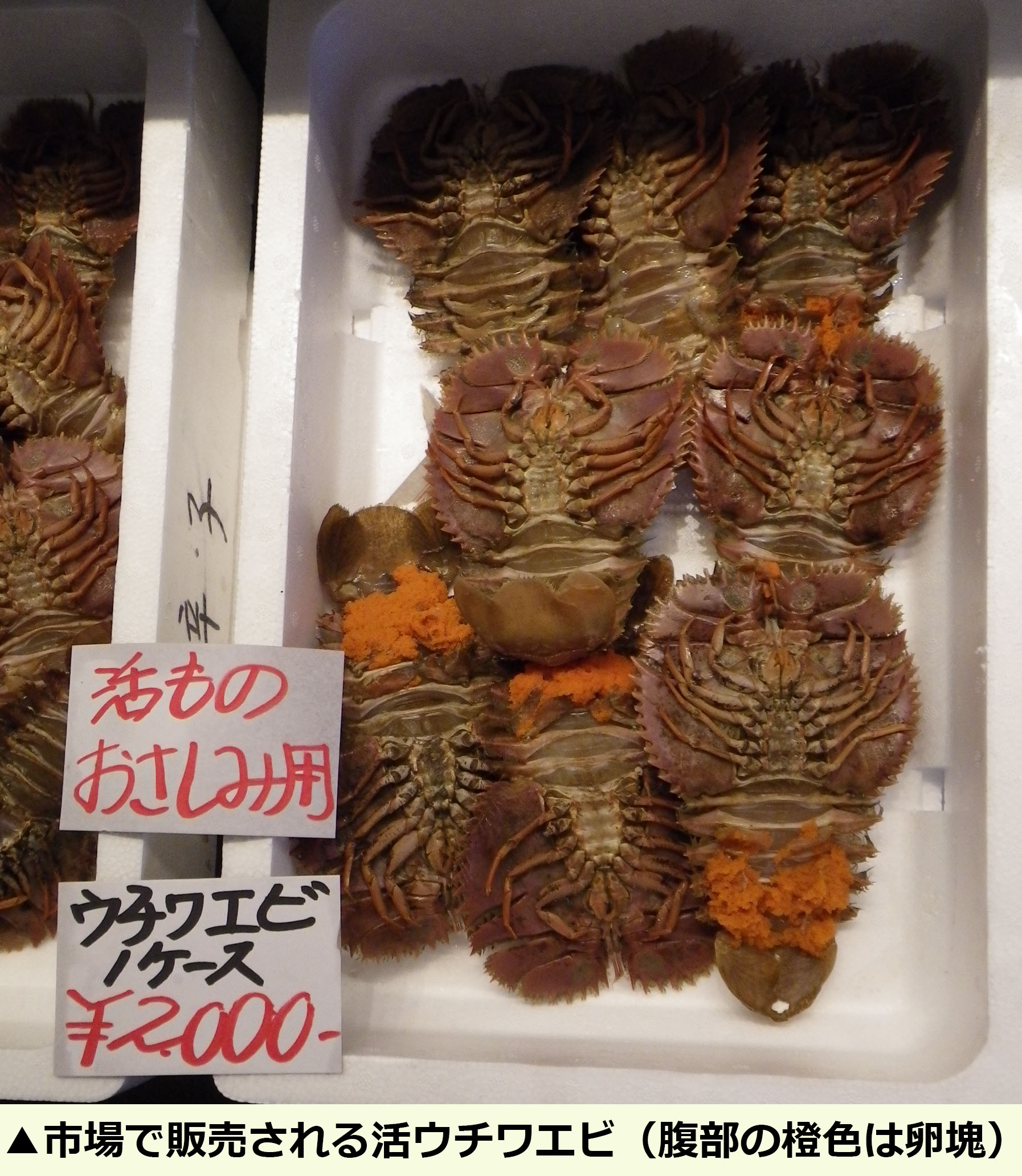
Spiny and slipper lobsters are among the most expensive seafood products in the world. In Japan, Japanese spiny lobsters (ise-ebi) can command prices exceeding 20,000 yen per kilogram during the New Year season (for context, a lobster measuring about 25 cm weighs roughly 500 g). On the other hand, while slipper lobsters are less widely known than spiny lobsters, species like the slipper lobster (semi-ebi) and fan-tailed slipper lobster (zōri-ebi) are highly prized as local tourism specialties in Wakayama and Okinawa Prefectures, as are fan lobsters (uchiwa-ebi) in the Chugoku, Shikoku, and Kyushu regions. In fact, many people find the flavor of slipper lobsters to be even more delicious than that of spiny lobsters. Depending on the season and individual catch, their prices can sometimes surpass those of spiny lobsters.
Basic research on the aquaculture of spiny and slipper lobsters in Japan has been conducted continuously since the late 19th century. However, even after more than 120 years, commercial production technologies have yet to be established, meaning that all spiny and slipper lobsters consumed today rely entirely on wild resources. This situation is identical overseas. In recent years, demand for these lobsters has grown not only in Japan but also across other Asian countries. As a result, the decline, depletion, and downsizing of wild populations due to overfishing have been reported globally.
Aquatic Invertebrates Research Group focuses on fan lobsters, which have a relatively short larval stage, to advance basic knowledge regarding the early life history of the infraorder Achelata. Furthermore, by driving applied research built upon these insights, we aim to achieve the commercial-scale aquaculture of spiny and slipper lobsters.
Nutritional Ecology of Phyllosoma Larvae
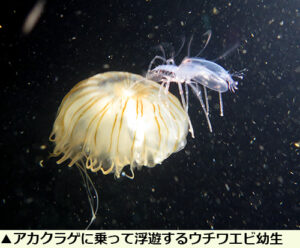 Because the larvae of spiny and slipper lobsters have bodies as flat as a leaf, they are called "phyllosoma" (derived from Greek: phyllo meaning leaf, and soma meaning body). They have glass-like, transparent, and delicate bodies, along with long legs equipped with feather-like swimming appendages (pleopods), and they inhabit clean, open ocean waters. Phyllosoma larvae hatch from the eggs carried on the female's abdomen (often referred to as "soto-ko" in Japan) and grow by drifting through the sea while feeding on zooplankton. In particular, recent research has revealed that gelatinous zooplankton, such as jellyfish and salps, serve as a biologically appropriate diet for them. By learning from the natural ecology of phyllosoma larvae which ride and float along with jellyfish in the wild, our group utilizes a wide range of methods, including micro-observational monitoring, video-based behavioral analysis, biochemical analysis, and genetic analysis. Through these approaches, we are working to identify the optimal diet and rearing environments that enable phyllosoma larvae to develop faster, larger, and healthier.
Establishment of Seed Production Technique
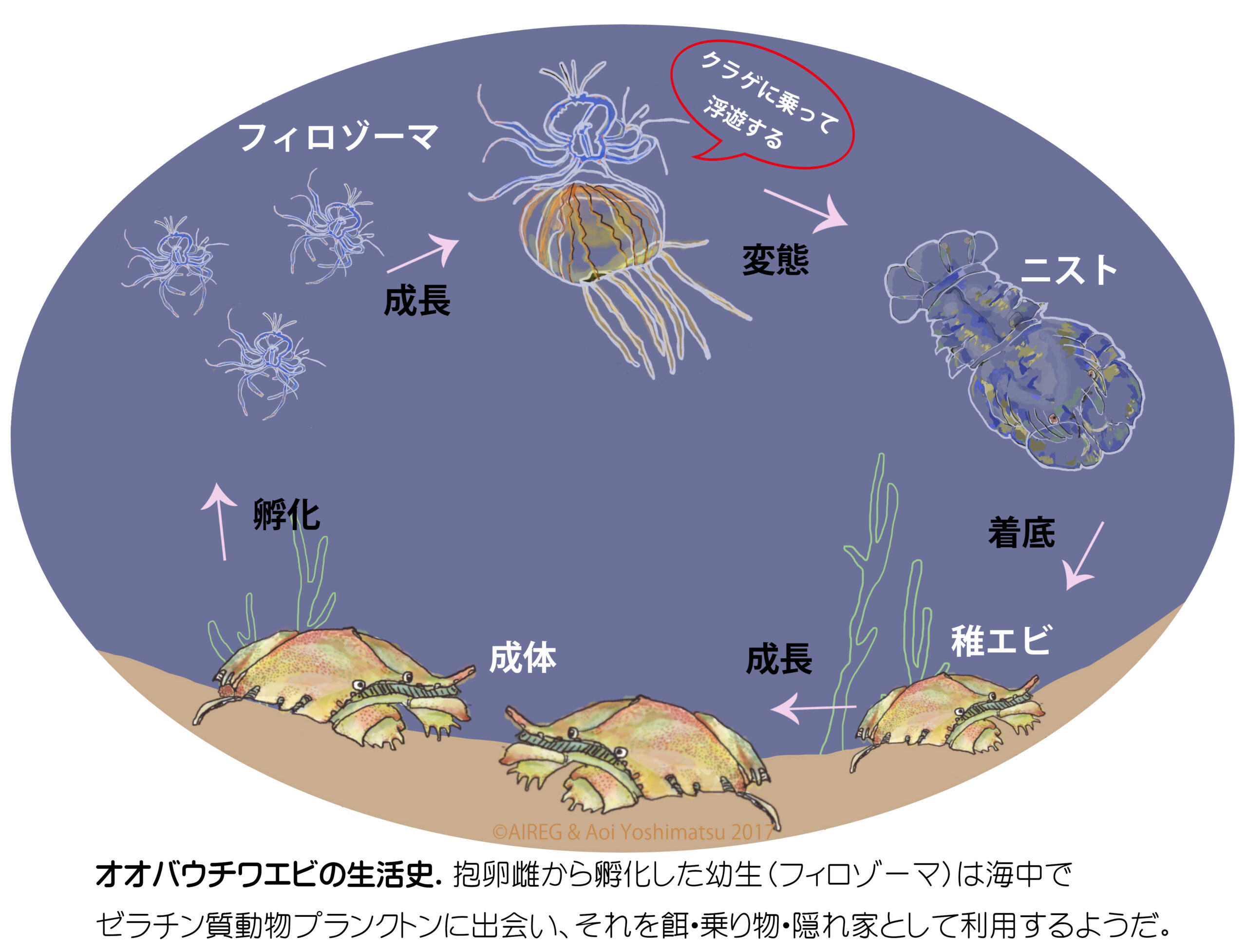 The slipper lobster family (Scyllaridae) is divided into four subfamilies: Scyllarinae, Ibacinae, Theninae, and Arctidinae. Among these, species belonging to the subfamily Scyllarinae consist entirely of small-sized lobsters; even when caught as bycatch in fishing nets, they rarely enter the commercial market. In contrast, the other subfamilies include large species that can command premium prices. Regardless of the species, all slipper lobsters hatch as phyllosoma larvae. They grow by molting repeatedly, anywhere from 4 to 30 times, before undergoing a drastic morphological transformation known as metamorphosis to reach the nisto stage. After one more molt, the nisto transitions into a juvenile lobster, finally taking on the same appearance as an adult. These juveniles serve as the "seed" that marks the starting point of aquaculture.
The duration of the phyllosoma stage varies significantly depending on the species. Because phyllosoma larvae are extremely delicate, often dying instantly if water quality or currents are slightly suboptimal, species with a shorter larval duration are considered to have a much higher likelihood of successful seed production. For example, fan lobsters native to Japan, such as Ibacus ciliatus, Ibacus novemdentatus, and Thenus orientalis, settle onto the seabed after a phyllosoma stage of only about 1 to 2 months. This period is remarkably short compared to species including the slipper lobster (Scyllarides squammosus), the fan-tailed slipper lobster (Parribacus japonicus), and various spiny lobster species (Palinuridae), whose larval stages persist for six months to a year.
Through our research, we have discovered that the larvae of fan lobsters (Ibacus spp.) and flathead lobsters (Thenus spp.) can develop efficiently by feeding on jellyfish. Using these lobsters as a model, we aim to achieve the social implementation of seed production techniques for spiny and slipper lobsters.
2. Symbiotic Interactions in Plankton Community
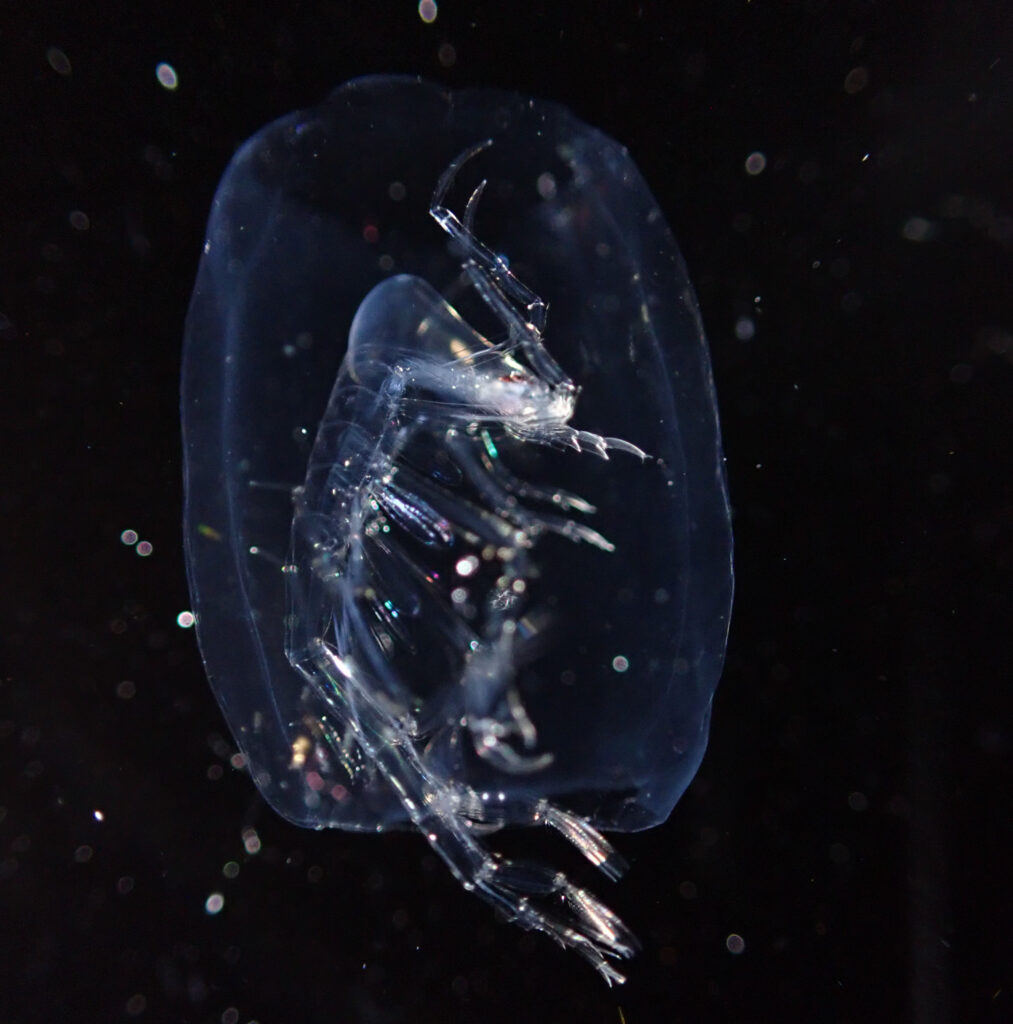 In marine planktonic ecosystems, diverse biological interactions significantly influence the survival and distribution of individual species. Utilizing direct underwater observation via scuba diving as our primary strength, our laboratory has successfully elucidated the living forms and behaviors of plankton, which were previously difficult to observe. We focus particularly on the relationships between decapod crustacean larvae and jellyfish, as well as the interactions between pelagic amphipods and gelatinous zooplankton, including salps, ctenophores, and medusae.
These relationships are highly diverse. Crustaceans do not merely utilize jellyfish for simple attachment or hitchhiking (phoresy); they also exploit them as a food source, shelter, and a means of transportation, and even use them as substrates for spawning. By elucidating the specific modes of utilization for each species, we aim to understand the true nature of interspecific interactions within plankton community and their evolutionary significance.
3. Taxonomy of Crustacean Larvae Collected in the Field
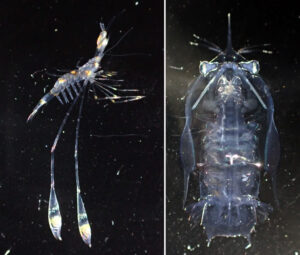 Many crustaceans, such as shrimp, crabs, and mantis shrimp, live on the seabed or on rocks. However, in most cases, they spend their larval stages drifting in the sea. In other words, they live as floating organisms (plankton) during a specific period of their lives. In general, the morphology of invertebrate larvae, including crustaceans, is completely different from that of their adult stage. Furthermore, the larvae themselves continuously change shape as they develop. Because of this, the current reality is that it remains difficult to identify invertebrate larvae collected in the field down to the species level.
Our group accumulates data regarding the morphology and habits of crustacean larvae, with the goal of developing an informative database that enables the morphological classification of these larvae. These insights help deepen our understanding of the reproductive ecology and distribution of each species. To conduct our surveys, we head out into the open ocean aboard the TOYOSHIO-MARU, a training vessel operated by Hiroshima University, using plankton nets for sampling. Furthermore, we dive alongside experienced divers to carry out direct underwater observations.
4. Taxonomy and Phylogenetic Evolution of Dendrogaster, a Parasite Living inside the Coelomic Cavity of Seastar
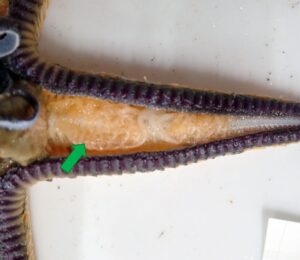 The genus Dendrogaster, which parasitizes the coelomic cavity of seastar, establishes a close symbiotic relationship with its hosts and exhibits high host specificity. However, many aspects of its taxonomic framework and evolutionary processes remain poorly understood. By combining morphological characteristics with molecular phylogenetic analysis, our laboratory is advancing the taxonomic revision of Dendrogaster to elucidate its diversity and evolutionary history. Furthermore, to clarify how Dendrogaster and its host seastar have co-evolved, we are collecting ecological data, including the distribution, habitats, and reproductive statuses of the seastar. Analyzing the parasite-host relationship from an evolutionary perspective is expected to contribute to our understanding of the mechanisms behind marine biodiversity creation and the processes of co-speciation.